

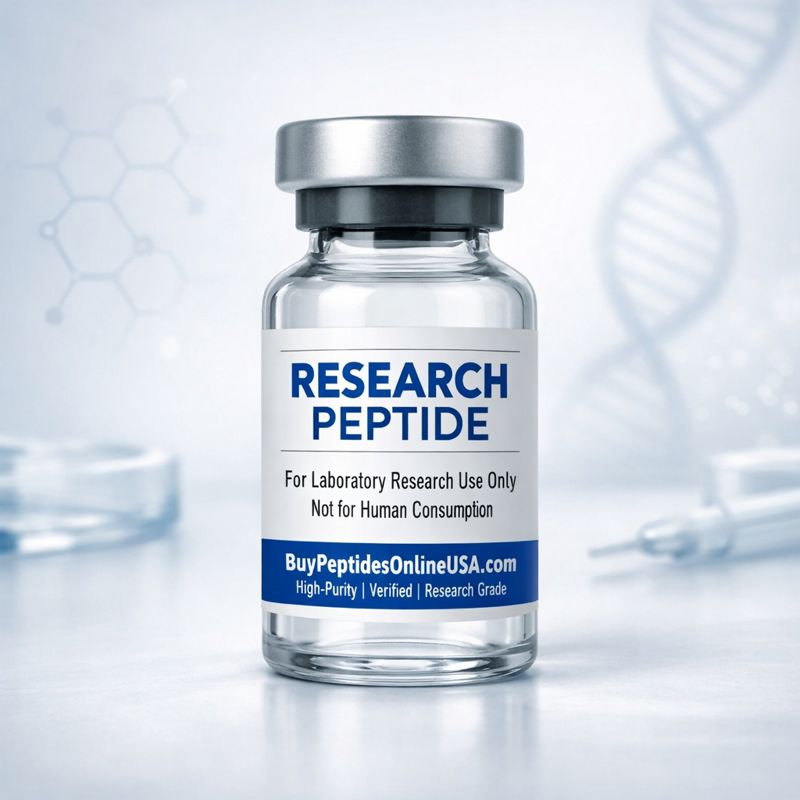
Methylene Blue
$85.00
Pharmaceutical-grade Methylene Blue for mitochondrial function, cognitive, & cellular research. ≥99% purity, third-party verified. Order now for laboratory investigations! 🔵
🔵 Introduction: A Century-Old Compound with Modern Research Applications
Welcome to the forefront of cellular and neurological research materials! Buy Peptides Online USA proudly presents pharmaceutical-grade Methylene Blue—a historically significant compound with emerging applications in contemporary mitochondrial, cognitive, and cellular research. First synthesized in 1876, Methylene Blue has transitioned from textile dye to medical antiseptic to, most recently, a compound of significant interest for cutting-edge laboratory investigations into cellular energy production, neurological function, and oxidative stress mechanisms.
Our research-grade Methylene Blue is meticulously prepared to exacting purity standards (≥99%) and undergoes rigorous third-party analytical verification to ensure consistent, reliable performance in your laboratory studies. Unlike many suppliers offering industrial or technical grades, we provide pharmaceutical-grade material suitable for sensitive research applications, complete with comprehensive documentation and batch-specific quality verification. Whether you’re investigating mitochondrial respiration, cognitive enhancement mechanisms, or cellular stress responses, our Methylene Blue offers the purity and reliability that serious research demands.
Historical Significance Meets Modern Research 📜➡️🔬
Methylene Blue represents a unique bridge between historical medical applications and contemporary scientific investigation:
- 1876: First synthesized by German chemist Heinrich Caro
- 1891: First medical use as an antimalarial agent
- 1930s-1950s: Psychiatric applications explored
- 1980s-Present: Research into mitochondrial function and neuroprotection
- Today: Investigated for potential roles in cellular energy, cognition, and aging
This fascinating history, combined with emerging preclinical research, makes Methylene Blue a particularly compelling compound for contemporary laboratory investigation across multiple disciplines.
🧪 What Is Methylene Blue? Understanding This Multifunctional Research Compound
Methylene Blue (chemical name: 3,7-bis(Dimethylamino)-phenothiazin-5-ium chloride) is a heterocyclic aromatic compound belonging to the phenothiazine class. Despite being categorized as “Methylene Blue peptide capsules” on some platforms, it’s crucial to understand that Methylene Blue is not a peptide—it’s a small synthetic molecule with distinct chemical properties and research applications.
Key Chemical Characteristics: 🔍
- Chemical class: Phenothiazine derivative
- Redox properties: Can exist in oxidized (blue) and reduced (colorless) states
- Electron transfer capacity: Functions as an alternative electron carrier in mitochondrial respiration
- Blood-brain barrier penetration: Can cross into central nervous system
- Photodynamic properties: Generates reactive oxygen species when illuminated
Common Research Grade Distinctions: 📊
| Grade | Purity | Typical Applications | Impurities |
|---|---|---|---|
| Technical Grade | 80-95% | Industrial dyes, staining | High impurity levels |
| USP Grade | ≥98% | Historical medical use | Controlled impurities |
| Research Grade (Ours) | ≥99% | Laboratory investigations | Minimal, characterized |
| Analytical Grade | ≥99.5% | Analytical chemistry | Ultra-low impurities |
Important Clarification: Despite the product categorization, Methylene Blue is not a peptide and does not contain amino acid sequences. It is a small molecule compound with distinct mechanisms, handling requirements, and research applications compared to peptides.
📋 Complete Chemical Specifications & Quality Verification
Chemical Specifications Table 📋
| Specification | Detail | Research Significance |
|---|---|---|
| Chemical Name | 3,7-bis(Dimethylamino)-phenothiazin-5-ium chloride | IUPAC nomenclature for precise identification |
| Molecular Formula | C₁₆H₁₈ClN₃S | Defines elemental composition |
| Molecular Weight | 319.85 g/mol | Essential for molar calculations |
| CAS Number | 61-73-4 | Unique chemical identifier |
| PubChem CID | 6099 | Public database reference |
| Common Synonyms | Methylthioninium chloride, Swiss Blue, Basic Blue 9 | Alternative identifiers in literature |
| Purity | ≥99% (HPLC verified) | Ensures research consistency |
| Solubility | Water (40 mg/mL), ethanol, DMSO | Important for formulation studies |
| Storage Conditions | Room temperature, protected from light | Maintains stability |
| Physical Appearance | Dark green/blue crystalline powder | Characteristic appearance |
| Shelf Life | 36 months when properly stored | Allows long-term study planning |
| Quality Verification | HPLC, MS, elemental analysis | Multi-method confirmation |
| Manufacturing Standard | cGMP compliant pharmaceutical facility | Quality production assurance |
| Heavy Metals | <10 ppm total | Safety for sensitive research |
| Intended Application | Laboratory research only | Compliance specification |
Certificate of Analysis (COA) – Comprehensive Quality Documentation 📑
Each batch of our Methylene Blue includes a detailed Certificate of Analysis (COA) documenting:
- HPLC purity analysis showing ≥99% main peak
- Mass spectrometry confirmation of molecular identity
- Ultraviolet-visible spectroscopy confirming characteristic absorption peaks
- Elemental analysis verifying chemical composition
- Heavy metal screening (Pb, Cd, Hg, As < 2 ppm each)
- Residual solvent analysis per ICH guidelines
- Loss on drying determination
- pH of solution verification
- Microbiological testing (total aerobic count, yeasts/molds)
- Endotoxin testing where applicable (<0.1 EU/mg)
Research Transparency: We provide batch-specific COA documentation to qualified researchers, offering complete analytical transparency for this historically significant research compound.
🔬 Scientific Research & Potential Applications
Primary Research Mechanisms 🧬
1. Mitochondrial Function Research:
- Alternative electron carrier: Bypasses complexes I-III in electron transport chain
- Cytochrome c reductase activity: Enhances electron transfer to cytochrome c
- ATP production studies: Effects on cellular energy generation
- Reactive oxygen species modulation: Can both generate and scavenge ROS depending on concentration
2. Neurological & Cognitive Research:
- Monoamine oxidase inhibition: Particularly MAO-A at research concentrations
- Cognitive enhancement models: Spatial memory, learning, retention studies
- Neuroprotection mechanisms: Cellular stress resistance in neuronal models
- Tau protein aggregation: Effects on pathological protein accumulation
3. Cellular & Molecular Research:
- Oxidative stress modulation: Concentration-dependent pro/antioxidant effects
- Cellular respiration studies: Oxygen consumption rate measurements
- Metabolic pathway investigations: Glycolysis vs. oxidative phosphorylation
- Gene expression effects: Nrf2 pathway and other stress response elements
Research Applications by Concentration ⚖️
| Concentration Range | Primary Research Applications | Key Mechanisms Studied |
|---|---|---|
| Low (nM-μM) | Neuroprotection, cognitive enhancement | MAO inhibition, mitochondrial enhancement |
| Medium (μM) | Cellular energy studies, cytoprotection | Alternative electron transport, ROS modulation |
| High (mM) | Antimicrobial, photodynamic therapy | ROS generation, DNA interaction |
| Variable | Staining applications (histology) | Redox-dependent color changes |
Current Research Landscape 📚
Methylene Blue has been investigated in diverse preclinical models:
- Metabolic studies: Enhanced cellular respiration and ATP production
- Neurological research: Cognitive performance and neuroprotection models
- Aging research: Mitochondrial function in aging cellular models
- Infectious disease: Antimicrobial properties against various pathogens
- Cancer research: Selective effects on malignant vs. normal cells
Important Research Considerations: ⚠️
- Concentration-dependent effects: Low vs. high concentrations may produce opposite effects
- Redox cycling properties: Can both accept and donate electrons
- Light sensitivity: Photodynamic properties require light protection
- MAO inhibition: Significant at research concentrations with implications for neurotransmitter metabolism
✅ Why Choose Our Research-Grade Methylene Blue?
Uncompromising Quality Standards 🏆
Pharmaceutical-Grade Purity:
- ≥99% purity verified by multiple analytical methods
- Consistent batch-to-batch quality for reproducible research
- Minimal impurity profile characterized and documented
- Heavy metal limits suitable for sensitive cellular studies
Research-Specific Advantages:
- Optimized for laboratory use – Not repurposed industrial material
- Complete documentation – Full analytical data with each batch
- Stability assurance – Properly packaged to prevent degradation
- Technical support – Knowledgeable assistance for research applications
Service Excellence:
- Fast USA shipping – Most orders processed within 24-48 hours
- Discreet packaging – Plain exterior with research-use labeling
- Documentation access – Batch-specific COA available upon request
- Research compliance – Strict adherence to laboratory-use guidelines
Comparative Quality Analysis ⚖️
| Quality Aspect | Our Research-Grade | Typical Technical Grade |
|---|---|---|
| Purity | ≥99% (HPLC verified) | 80-95% (variable) |
| Documentation | Comprehensive COA | Often minimal or unavailable |
| Heavy Metals | <10 ppm total | Often 50-200 ppm |
| Batch Consistency | High (cGMP production) | Variable (industrial process) |
| Impurity Profile | Characterized, minimal | Uncharacterized, potentially significant |
| Research Suitability | Excellent for sensitive studies | Limited to non-sensitive applications |
🌡️ Handling, Storage & Laboratory Protocols
Optimal Storage Conditions 💡
Despite common misconceptions, Methylene Blue is relatively stable when properly stored:
- Primary storage: Room temperature (15-25°C) in airtight container
- Critical protection: Protect from light – amber glass or opaque container
- Moisture control: Include desiccant to prevent clumping
- Avoid extremes: Protect from excessive heat (>40°C) or freezing
- Solution storage: Freshly prepared solutions recommended; store at 4°C if needed
Important Stability Notes: ⚠️
- Light sensitivity: Degrades when exposed to light (photodynamic properties)
- Oxidation: Can oxidize other compounds in solution
- Reduction: Can be reduced to colorless leuco form (reversible)
- Long-term stability: Powder form stable for years when properly stored
Laboratory Handling Guidelines 🧤
- Light protection: Work in low-light conditions or use amber glassware
- Personal protection: Gloves, lab coat, eye protection recommended
- Solution preparation: Use deionized water, protect from light
- Concentration verification: UV-Vis spectroscopy for accurate concentration
- Waste disposal: Follow institutional guidelines for chemical waste
Research Protocol Considerations 🐭
When designing studies with Methylene Blue:
- Concentration optimization: Pilot studies to determine effective ranges
- Light control: Consistent lighting conditions across experiments
- Solution freshness: Prepare immediately before use when possible
- Vehicle controls: Appropriate controls for solvent effects
- Timing considerations: Account for potential delayed effects
- Endpoint selection: Align with primary mechanisms being studied
❓ Frequently Asked Questions (FAQs)
Q: Is Methylene Blue a peptide?
A: No, Methylene Blue is not a peptide. It is a small synthetic molecule belonging to the phenothiazine chemical class. Despite occasional categorization with peptides, it has completely different chemical properties, mechanisms, and research applications. Peptides are amino acid chains, while Methylene Blue is an organic salt with redox-active properties.
Q: What is the difference between research-grade and technical-grade Methylene Blue?
A: Research-grade (ours) is ≥99% pure with characterized impurities, comprehensive documentation, and suitability for sensitive laboratory studies. Technical-grade is typically 80-95% pure with uncharacterized impurities, minimal documentation, and intended for industrial applications like textile dyeing. The purity difference significantly impacts research reproducibility and outcomes.
Q: Why is light protection important for Methylene Blue?
A: Methylene Blue exhibits photodynamic properties—when exposed to light (especially specific wavelengths), it can generate reactive oxygen species that degrade the compound itself and potentially affect other compounds in solution. Light protection maintains stability and ensures consistent concentrations in research applications.
Q: How should I prepare Methylene Blue solutions for research?
A: Use deionized water, prepare in amber glassware or low-light conditions, verify concentration via UV-Vis spectroscopy (λ_max ≈ 664 nm), use freshly prepared solutions when possible, and store at 4°C protected from light if not used immediately. Document preparation details for reproducibility.
Q: What concentration ranges are typically used in research?
A: Concentration depends entirely on research goals: nanomolar to low micromolar for neurological studies, micromolar range for mitochondrial function, and millimolar concentrations for antimicrobial or photodynamic applications. Always conduct concentration-response studies to determine optimal ranges for specific models.
Q: Does Methylene Blue inhibit monoamine oxidase (MAO)?
A: In research settings, Methylene Blue has demonstrated MAO-A inhibition at relevant concentrations, which may affect neurotransmitter metabolism in neurological studies. Researchers should consider this mechanism when designing studies involving neurotransmitter systems or when combining with other compounds affecting monoamine pathways.
⚠️ Critical Compliance & Safety Information
Intended Use Statement 📋
Methylene Blue is sold exclusively for laboratory research applications by qualified personnel in controlled settings. These products are:
- NOT for human or veterinary use
- NOT for consumption
- NOT intended as drugs, cosmetics, or dietary supplements
- NOT for diagnostic or therapeutic applications
- NOT for in-vivo human studies without appropriate regulatory approvals
Important Safety Considerations ⚠️
Chemical Safety:
- Staining property: Can stain skin, clothing, and surfaces blue
- Oxidizing agent: May react with reducing agents
- Photosensitizer: Generates ROS when exposed to light
- MAO inhibition: Relevant for neurological research considerations
Regulatory Compliance: ⚖️
Researchers accept full responsibility for ensuring:
- All research complies with institutional guidelines and applicable regulations
- Personnel are properly trained in handling chemical compounds
- Documentation is maintained for all research purposes and protocols
- Materials are used only in approved laboratory facilities
- Chemical safety protocols are established and followed
Research Ethics & Transparency 🎯
We support responsible scientific advancement through:
- Providing accurate, evidence-based product information
- Supplying complete analytical documentation for research verification
- Maintaining transparent business practices with research customers
- Encouraging ethical study design with appropriate controls
- Promoting responsible publication practices with accurate methodology
🚀 Ordering Process & Customer Support
Streamlined Research Procurement 📦
- Select Quantity – Based on research scope and duration
- Secure Checkout – Multiple payment options including cryptocurrency
- Order Confirmation – Immediate email with details and timeline
- Fast Processing – Most research orders ship within 1-2 business days
- Discreet Delivery – Plain packaging with research-use labeling
- Documentation Access – Receive batch-specific COA upon request
Shipping & Logistics ✈️
- USA Domestic – 2-5 business days, FREE on orders over $300
- Express Options – Overnight and 2-day available for urgent needs
- International – Worldwide delivery to permitted research destinations
- Proper Packaging – Light-protected, secure containers
- Discreet Packaging – No external indications of contents
- Tracking Information – Real-time updates on shipment progress
Customer Support Services 💬
- Technical Consultation – Chemical properties and handling guidance
- Research Protocol Discussion – Application and study design questions
- Order Assistance – Placement, tracking, and delivery support
- Documentation Requests – COA and analytical data
- Compliance Guidance – Appropriate research use information
- Problem Resolution – Responsive handling of any order concerns
💎 Why Researchers Worldwide Trust Our Methylene Blue
For investigators exploring cellular energy mechanisms, neurological function, or redox biology, our pharmaceutical-grade Methylene Blue offers uncompromising quality and complete documentation. With a ≥99% purity guarantee, batch-specific analytical verification, and proper light-protected packaging, we provide research materials worthy of publication-quality science.
Our pharmaceutical manufacturing standards, fast domestic shipping, and dedicated scientific support ensure you receive exactly what you need—when you need it—for uninterrupted research progress. Whether you’re establishing new mitochondrial assays, studying cognitive enhancement mechanisms, or investigating cellular stress responses, our Methylene Blue provides the purity, consistency, and documentation necessary for robust, reproducible science.
Ready to advance your research with premium Methylene Blue? Browse our complete selection of research compounds, review all documentation, and place your order with confidence today.
For laboratory research use only. Not for human consumption. All purchases subject to terms and conditions verifying research purpose.
| Analysis Certificate |
COA Available |
|---|---|
| Certifications |
Third-Party Tested ,GMP Manufactured |
| Intended Use |
Research Use Only (RUO) ,For Laboratory Use ,Not for Human Consumption ,Not for Diagnostic Use |
| Purity |
≥98% |
| Shelf Life |
12 months |
| Storage |
Store in a Cool, Dry Place ,Protect from Light ,Refrigerate (2-8°C) |
| Form |
Oral (Capsules/Tablets) |
| Primary Function |
Research ,Cognitive & Mitochondrial Research ,Antioxidant Research |
| Quantity |
10mg |
| Capsules |
60 Capsules |
Related products
5-Amino-1MQ Capsules
BPC-157 Arginate, Thymosin Beta-4 Fragment (Repair and Recovery Capsules)
Dihexa Capsules
GHK-Cu Capsules (Copper Tripeptide)
Longevity, Performance & Obesity Research Capsules
MK-677 (Ibutamoren)
Orforglipron Capsules (GLP1-O)