

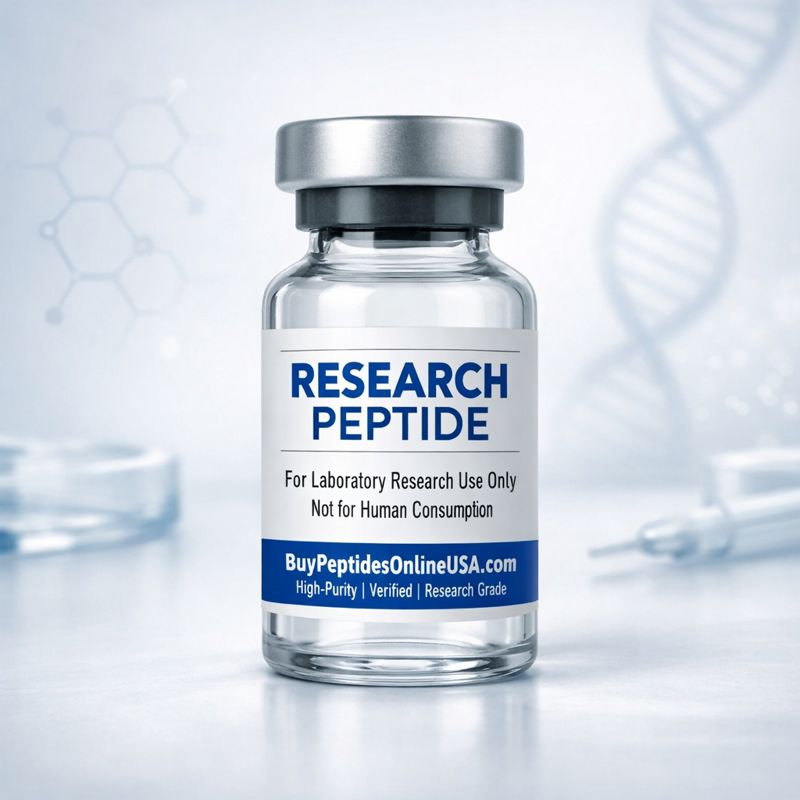
GHRP-6, CJC-1295 no DAC (Blend)
Price range: $85.00 through $575.00
Premium GHRP-6 + CJC-1295 no DAC (Mod GRF) Blend | The Classic GHRH/GHRP Synergy | ≥98% Purity
Powerful dual-action secretagogue stack combining first-generation GHRP-6’s robust GH pulse and orexigenic effects with DPP-4 resistant GHRH agonism. GMP manufactured, component-verified HPLC/MS, COA available. Lyophilized. Strictly RUO. Buy Peptides Online USA.
🧬 INTRODUCTION: The Foundational GHRH–GHRP Synergy
Before the advent of highly selective compounds like Ipamorelin, the foundational combination that unlocked the synergistic potential of the somatotropic axis was the pairing of a Growth Hormone-Releasing Hormone (GHRH) analog with the first potent, synthetic Growth Hormone-Releasing Peptide (GHRP), GHRP-6. The GHRP-6 and CJC-1295 no DAC Blend represents this classic pharmacological synergy, offering researchers a powerful tool to model the complete, integrated response of the pituitary to dual hypothalamic signals.
CJC-1295 without DAC—accurately designated Modified GRF (1-29) —is the DPP-4-resistant GHRH analog. With its strategic amino acid substitutions (D-Ala², Ala¹⁵, Leu²⁷), it resists rapid enzymatic degradation, providing a ~30-minute window of GHRH receptor activation. This primes the pituitary for GH synthesis and establishes the framework for a physiological, pulsatile release .
GHRP-6 (Growth Hormone-Releasing Peptide-6) is the prototypic GHSR-1a agonist. As a first-generation secretagogue, its pharmacological profile is broader than later analogs, characterized by:
- Robust GH release via the Gαq/IP₃/PKC/Ca²⁺ pathway.
- Potent, reliable orexigenic signaling (appetite stimulation) via NPY/AgRP neuron activation .
- Demonstrated gastroprokinetic effects .
- A distinct mechanism of action that, crucially, does not cross-desensitize with the GHRH receptor pathway .
When combined, these two mechanistically distinct secretagogues produce a GH response that is synergistic—significantly greater than the sum of their individual effects. This synergy is a cornerstone of neuroendocrinology, arising from:
- Non-competitive, independent receptor pathways (GHRH-R vs. GHSR-1a) .
- Intracellular signal integration between Gαs (cAMP/PKA) and Gαq (IP₃/PKC/Ca²⁺) pathways .
- Somatostatin antagonism mediated by GHRP-6, which removes the tonic inhibition on GH release .
At Buy Peptides Online USA, we supply this foundational dual-action blend as a high-purity, GMP-manufactured research reagent. Each constituent undergoes independent High Performance Liquid Chromatography (HPLC) and Mass Spectrometry (MS) verification prior to precision blending—the only scientifically defensible standard for heterogeneous peptide formulations.
✅ WHAT IS THE GHRP-6, CJC-1295 (NO DAC) BLEND?
This blend unites the first potent GHRP with a modern, stabilized GHRH analog into a single, pre-formulated research tool for classic and comparative somatotropic axis investigation.
🔹 Component Breakdown & Mechanistic Rationale
| Component | Category | Primary Mechanism | Distinctive Features | Half-Life (SC) |
|---|---|---|---|---|
| CJC-1295 (no DAC) | GHRH Analog (Mod GRF 1-29) | GH synthesis; pulsatile release signaling; Gαs/cAMP/PKA/CREB activation | DPP-4 resistant; 30-min pulse window; no albumin binding | ~30 min |
| GHRP-6 | GHRP / Ghrelin Mimetic (First-Generation Hexapeptide) | Potent GH pulse; Gαq/IP₃/PKC/Ca²⁺ signaling; somatostatin antagonism | Intense orexigenic effect; gastroprokinetic; classic pharmacological benchmark | ~30-60 min |
🔬 CJC-1295 without DAC (Modified GRF 1-29)
Nomenclature Clarity: This is the non-DAC variant. It is Modified GRF (1-29) , a tetrasubstituted analog of Sermorelin (GRF 1-29). The "no DAC" designation confirms the absence of the Drug Affinity Complex. This is the appropriate tool for pulsatile GH research, unlike its DAC-conjugated counterpart which produces sustained, non-physiological GH release .
Strategic amino acid substitutions—D-Ala², Ala¹⁵, Leu²⁷—confer resistance to dipeptidyl peptidase-4 (DPP-4) degradation, extending bioactive half-life to ~30 minutes.
Molecular Formula: C₁₅₂H₂₅₂N₄₄O₄₂
Molecular Weight: ~3367.95 g/mol
CAS Number: 863288-34-0
Sequence: Tyr-D-Ala-Asp-Ala-Ile-Phe-Thr-Gln-Ser-Tyr-Arg-Lys-Val-Leu-Ala-Gln-Leu-Ser-Ala-Arg-Lys-Leu-Leu-Gln-Asp-Ile-Leu-Ser-Arg-NH₂
🔬 GHRP-6 (Growth Hormone-Releasing Peptide-6)
GHRP-6 is a synthetic hexapeptide with the sequence His-D-Trp-Ala-Trp-D-Phe-Lys-NH₂. Developed in the 1980s, its discovery was pivotal, demonstrating a non-GHRH mediated pathway for GH release and ultimately leading to the identification of the ghrelin receptor (GHSR-1a) .
Key Mechanistic Attributes:
- Potent GH Pulse Amplitude: A first-generation benchmark, it produces a sharp, robust GH peak .
- Somatostatin Antagonism: Suppresses somatostatin receptor expression, reducing sensitivity to the endogenous GH brake .
- Intense Orexigenic Effect: This is a defining feature. GHRP-6 is a potent stimulator of appetite via activation of NPY/AgRP neurons in the arcuate nucleus, making it a valuable tool for studying ghrelinergic feeding pathways .
- Gastroprokinetic Effects: It stimulates gastric motility, a property shared with ghrelin .
- No Cross-Desensitization with GHRH: A critical pharmacological feature. Cells desensitized to GHRP-6 remain fully responsive to GHRH, confirming they act via distinct, independent receptors .
Molecular Formula: C₄₆H₅₆N₁₂O₆
Molecular Weight: ~873.01 g/mol
CAS Number: 87616-84-0
Sequence: His-D-Trp-Ala-Trp-D-Phe-Lys-NH₂
The Classic Synergy:
CJC-1295 (no DAC) primes the somatotroph via the GHRH receptor, providing the synthesis and pulsatile framework. GHRP-6 delivers a powerful, rapid GH pulse via the GHSR-1a while simultaneously stimulating appetite and gastric pathways. Their independent receptor mechanisms allow for synergistic GH release without mutual interference or desensitization.
🧪 PRODUCT SPECIFICATIONS & TECHNICAL DATA SHEET
Critical Quality Note: This blend comprises two peptides with different molecular weights and physicochemical properties: GHRP-6 (hexapeptide, ~0.87 kDa) and CJC-1295 no DAC (30-mer, ~3.4 kDa). Simultaneous HPLC purity quantitation is analytically challenging due to differential retention times and UV extinction coefficients. Therefore, we employ component-wise pre-analytical verification—the gold standard for heterogeneous peptide blends .
📊 Comprehensive Peptide Specifications Table
| Specification | CJC-1295 (no DAC) Component | GHRP-6 Component |
|---|---|---|
| CAS Number | 863288-34-0 | 87616-84-0 |
| Molecular Formula | C₁₅₂H₂₅₂N₄₄O₄₂ | C₄₆H₅₆N₁₂O₆ |
| Molecular Weight | ~3367.95 g/mol | ~873.01 g/mol |
| Amino Acid Count | 30 residues | 6 residues |
| Sequence (Single Letter) | Y-D-A-I-F-T-Q-S-Y-R-K-V-L-A-Q-L-S-A-R-K-L-L-Q-D-I-L-S-R-NH₂ | H-d-W-A-W-d-F-K-NH₂ |
| Structural Features | Linear; DPP-4 resistant (D-Ala², Ala¹⁵, Leu²⁷) | Linear; D-amino acids (D-Trp², D-Phe⁵) |
| Quantity per Vial | 2 mg | 2 mg |
| Purity Standard | ≥98% (HPLC, pre-blend) | ≥98% (HPLC, pre-blend) |
| Identity Verification | Mass Spectrometry (MS) | Mass Spectrometry (MS) |
| Endotoxin Level | <0.05 EU/mg | <0.05 EU/mg |
| Physical Appearance | —White to off-white lyophilized powder (uniform blend)— | |
| Solubility | Soluble in Bacteriostatic Water (0.9% Benzyl Alcohol) / Sterile Water | |
| Storage (Lyophilized) | Store at -20°C (-4°F) for long-term stability (>18 months). Protect from light and moisture. | |
| Storage (Reconstituted) | Refrigerate at 2-8°C (36-46°F) . Use within 28 days. Do NOT freeze . | |
| Shelf Life | 18-24 months (lyophilized, unopened, maintained at -20°C) | |
| Quality Verification | Third-Party HPLC/MS (pre-blend) | Batch-Specific COA Available |
| Manufacturing Standard | GMP (Good Manufacturing Practice) / ISO-Aligned Facilities | |
| Intended Application | Research Use Only (RUO) — In Vitro / Preclinical Ex Vivo Models |
🔬 VERIFIED QUALITY: THE CLASSIC SYNERGY VALIDATION PROTOCOL
Analytical Challenge: CJC-1295 no DAC (30-mer) and GHRP-6 (6-mer) possess dramatically different hydrophobicities and optimal detection wavelengths.
Our 4-Tier Verification Protocol:
✅ Tier 1: Component Pre-Analysis. Each raw peptide is individually analyzed via reverse-phase HPLC (C18 column, component-optimized gradients) to confirm ≥98% purity. Identity confirmed via ESI-MS or MALDI-TOF MS:
- CJC-1295 no DAC: ~3368 Da [M+H]⁺
- GHRP-6: ~873 Da [M+H]⁺
✅ Tier 2: Precision Blending. Components are gravimetrically dispensed in ISO 7 (Class 10,000) cleanroom environments using calibrated micro-balances (±0.01 mg accuracy). Blend ratios verified by dual weighing.
✅ Tier 3: Post-Blend Identity Confirmation. The final blend undergoes MS to confirm the presence and correct molecular weight signatures of both peptides.
✅ Tier 4: Endotoxin & Bioburden. LAL chromogenic assay verification of <0.05 EU/mg—essential for sensitive primary cell culture and in vivo applications.
"For this classic blend, component-wise pre-validation with full analytical traceability ensures researchers can confidently replicate the foundational synergy studies." — Adapted from analytical chemistry protocols for peptide combinations.
🧬 PRIMARY RESEARCH APPLICATIONS & TYPICAL RESEARCH FOCUSES
This dual GHRH/GHRP blend is designed exclusively for controlled laboratory investigations. Below are the predominant domains of preclinical inquiry:
1. 📈 Foundational & Comparative Somatotropic Axis Research
Primary Function/Purpose: Growth Hormone Support, Neuroendocrine Research, Receptor Pharmacology
Key Focus: GHRH–GHRP pathway independence, signal integration, synergy quantification.
- The Positive Control for Synergy: This combination is the benchmark for demonstrating the synergistic GH release (2 + 4 = 12) that occurs when the GHRH and GHSR pathways are co-activated .
- Receptor Independence Studies: GHRP-6's lack of cross-desensitization with the GHRH receptor makes this blend ideal for studying how two distinct GPCR pathways (Gαs and Gαq) converge at the cellular level to amplify hormone secretion .
- Research Model: Primary rat pituitary cell perifusion; GH-3 cell line; cAMP and intracellular calcium flux assays; receptor desensitization time-course studies.
2. 🧠 Appetite, Energy Homeostasis & Metabolic Research
Primary Function/Purpose: Weight Management, Metabolic Research, Obesity Studies
Key Focus: Orexigenic signaling, ghrelin receptor pharmacology, NPY/AgRP neuron activation.
- GHRP-6 Component: Provides the classic, robust orexigenic signal. It is a potent stimulator of food intake via NPY/AgRP neurons, serving as a reliable positive control for all ghrelinergic appetite studies .
- CJC-1295 Component: Provides the GH/IGF-1 mediated metabolic effects (lipolysis, nitrogen retention) without orexigenic confounds.
- Research Application: Enables researchers to dissect the interplay between GH-driven metabolism and appetite-driven energy intake.
- Research Model: DIO rodent models; metabolic cage studies (indirect calorimetry); pair-feeding paradigms; food intake monitoring; NPY/AgRP neuron calcium imaging.
3. 🔬 Gastrointestinal Motility & Prokinetic Research
Primary Function/Purpose: Gastrointestinal Research, Smooth Muscle Physiology
Key Focus: Gastric contractility, ghrelin receptor effects.
- GHRP-6 is a well-characterized gastroprokinetic agent, with effects comparable to ghrelin and motilin. This blend allows for the study of these peripheral effects in the context of a systemic GH pulse .
- Research Model: Conscious animal GI motility recording; isolated gastric smooth muscle strips; contractility assays.
4. 🧪 ACTH, Prolactin & Cortisol Pharmacology (Comparative)
Primary Function/Purpose: Endocrine Research, Pituitary Hormone Interactions
Key Focus: Off-target endocrine effects, GHSR-1a selectivity.
- As a first-generation GHRP, GHRP-6 has a broader endocrine profile than later analogs. At high doses, it can produce mild, measurable elevations in prolactin and cortisol .
- This blend enables researchers to compare this classic profile against the effects of the GHRH analog, providing a more complete picture of the somatotropic network's influence on the HPA axis.
5. 🔬 Emerging Frontier: Tissue Protection & Regeneration
Primary Function/Purpose: Recovery & Healing, Regenerative Medicine
Key Focus: Organ protection, ischemia-reperfusion injury.
- GHRP-6 has demonstrated protective effects in models of multiple organ failure, including the liver, intestine, and lungs .
- GH/IGF-1 axis activation (via CJC-1295) is also linked to tissue repair.
- This blend provides a tool to study the potential combined protective effects of a GHRP and GHRH analog.
❄️ HANDLING, STORAGE & RECONSTITUTION PROTOCOL
Critical Note: Both peptides are stable when lyophilized and stored frozen. Reconstituted solutions should not be frozen and should be used within 28 days .
🧊 Storage Integrity Protocol
| State | Temperature | Duration | Critical Notes |
|---|---|---|---|
| Lyophilized (Long-Term) | -20°C (-4°F) | 18-24 months | Stable; desiccated, light-protected. Avoid repeated freeze-thaw cycles. |
| Lyophilized (Short-Term) | 2-8°C (35-46°F) | <4 weeks | Acceptable if -20°C unavailable. |
| Reconstituted (In Use) | 2-8°C (35-46°F) | ≤28 days | Do NOT freeze. Discard after 28 days. |
💧 Standardized Reconstitution Protocol (4mg Total Mass)
Based on validated laboratory protocols for 2mg CJC-1295 no DAC + 2mg GHRP-6 :
- Equilibration: Allow vial to reach room temperature in a desiccated environment (15-20 minutes).
- Solvent Selection: Use Bacteriostatic Water (0.9% Benzyl Alcohol) for multi-use studies.
- Volume Calculation: Inject 2.0 mL of solvent.
- Final Concentration: 2.0 mg/mL total peptide.
- Component Concentrations: 1.0 mg/mL each (CJC-1295 and GHRP-6).
- Technique: Insert syringe at 45° angle. Direct fluid slowly against the inner vial wall. Do NOT shake. Gently swirl or roll for 60 seconds.
- Visual Inspection: Solution should be clear and colorless. Discard if particulate matter present.
📊 Syringe Measurement Reference (U-100 Insulin Syringe)
At 2.0 mL reconstitution volume (1.0 mg/mL concentration per component) :
| Desired Dose (mcg each) | CJC-1295 Volume | GHRP-6 Volume | Total Draw (Units on U-100) |
|---|---|---|---|
| 50 mcg each | 0.05 mL | 0.05 mL | 10 units |
| 100 mcg each | 0.10 mL | 0.10 mL | 20 units |
| 150 mcg each | 0.15 mL | 0.15 mL | 30 units |
| 200 mcg each | 0.20 mL | 0.20 mL | 40 units |
⏱️ Research Dosing Frequency Guidance
For chronic studies modeling physiological pulsatility:
- Frequency: 2-3x daily (e.g., 0800, 1400, 2000).
- Interval: Minimum 3-4 hours between administrations to allow for receptor recovery and prevent desensitization, particularly relevant for the GHRP-6 component .
- Saturation Dose: The dose at which GH release plateaus for each component is typically 100 mcg per pulse .
❓ FREQUENTLY ASKED QUESTIONS (FAQ)
Q: What is the experimental rationale for using this classic GHRP-6 blend over newer blends with GHRP-2 or Ipamorelin?
A: This is a question of experimental design.
| Feature | GHRP-6 + CJC-1295 Blend | GHRP-2 + CJC-1295 Blend | Ipamorelin + CJC-1295 Blend |
|---|---|---|---|
| GHRP Generation | First | Second | Third |
| Orexigenic Effect | Intense (Benchmark) | Moderate | Negligible |
| Gastroprokinetic Effect | Significant | Less | Minimal |
| Historical Significance | The foundational synergy | – | – |
| Best For | Appetite studies, GI motility, historical replication, maximal orexigenic response | Maximal GH pulse amplitude with moderate appetite | Clean GH data, no appetite/endocrine confounds |
Choose this GHRP-6 blend when your research question requires the classic, robust orexigenic and gastroprokinetic effects of the first-generation GHRP, or when you are replicating foundational studies on GHRH–GHRP synergy .
Q: Why is CJC-1295 "no DAC" specified for this classic blend?
A: Critical distinction. The original synergy studies were performed with pulsatile GHRH. CJC-1295 no DAC (Mod GRF 1-29) mimics this with its ~30-minute half-life. CJC-1295 with DAC has a half-life of ~6-8 days and produces sustained GH bleed (female pattern), which is a fundamentally different research model. Our blend uses the correct, pulsatile analog .
Q: Does this blend cause desensitization?
A: The components desensitize their own receptors independently. GHRP-6 can cause GHSR desensitization with continuous exposure, requiring a recovery period. However, a key finding of classic research is that GHRP-6 desensitization does not affect the response to GHRH . This blend allows for the study of this independent regulation.
Q: Can GHRP-6 be used alone, or must it be combined with GHRH?
A: GHRP-6 can be used alone to study isolated GHSR-1a signaling, particularly its orexigenic and gastroprokinetic effects. However, for maximal, synergistic GH release, co-administration with a GHRH analog (as in this blend) is required .
Q: Do you provide medical dosage instructions?
A: Absolutely not. As a Research Use Only (RUO) supplier, we strictly prohibit providing medical or veterinary instructions. Determining the appropriate dose, concentration, and administration route for your specific IACUC-approved protocol is the sole responsibility of the qualified Principal Investigator (PI).
🧬 PEPTIDE STRUCTURE & STABILITY INSIGHTS
Why "no DAC" Matters in CJC-1295:
The Drug Affinity Complex (DAC) is a reactive moiety that covalently binds to albumin. CJC-1295 without DAC completely lacks this modification. It is a DPP-4-resistant GRF 1-29 analog, not a sustained-release agent. Its 30-minute half-life is a feature, essential for modeling pulsatile release .
The D-Amino Acids of GHRP-6: The Key to Activity
GHRP-6 contains D-Trp² and D-Phe⁵. Early GHRPs made of all L-amino acids were potent in vitro but inactive in vivo. The strategic incorporation of D-amino acids confers resistance to proteolytic cleavage, enabling systemic bioavailability. The D-Trp² residue is absolutely essential for high-affinity GHSR-1a binding .
No Cross-Desensitization: A Cornerstone Finding
The fact that GHRP-6 and GHRH act via separate receptors that do not cross-desensitize is a foundational principle of neuroendocrinology. This blend allows researchers to directly observe this phenomenon, as the CJC-1295 signal remains fully effective even if the GHRP-6 pathway is desensitized .
C-Terminal Amidation (-NH₂):
Both peptides feature C-terminal amidation. This neutralizes the negative charge, improving receptor recognition and proteolytic stability by blocking carboxypeptidase cleavage.
🚀 WHY PURCHASE GHRP-6, CJC-1295 (NO DAC) BLEND FROM BUY PEPTIDES ONLINE USA?
The peptide supply landscape is heterogeneous. We differentiate through analytical transparency and researcher-first logistics.
✅ Component-Verified Purity: Each constituent is tested individually (≥98% HPLC/MS) prior to precision blending—essential for this heterogeneous blend.
✅ Authentic, Classic Sequences: GHRP-6 (CAS 87616-84-0) and CJC-1295 no DAC (CAS 863288-34-0). Verified. No substitutions.
✅ Accurate "no DAC" Nomenclature: We correctly label Mod GRF 1-29, ensuring you have the right tool for pulsatile research.
✅ Third-Party Transparency: Independent COA documentation per batch—full analytical traceability.
✅ GMP-Ancillary Manufacturing: Produced in ISO 9001-aligned facilities; rigorous documentation.
✅ Low Endotoxin: <0.05 EU/mg—suitable for sensitive primary cell culture and in vivo work.
✅ Cold-Chain Packaging: Lyophilized peptides shipped with temperature-indicating desiccants and insulated containers.
✅ Authenticity Guarantee: Full replacement or refund if product fails independent verification.
✅ Secure Crypto Payments: Bitcoin, Ethereum, USDT accepted.
✅ USA-Based Operations: Rapid domestic fulfillment. Free shipping on orders over $300.
📦 PACKAGING & DELIVERY INTELLIGENCE
- Primary Container: Sterile, crimp-sealed Type I borosilicate glass vial.
- Fill Strength: 4mg total mass (2mg CJC-1295 no DAC / 2mg GHRP-6).
- Protection: Foil pouch with desiccant; anti-static cushioning.
- Discretion: Plain, non-descript outer carton.
- Lead Time: Orders processed within 1-2 business days. USA delivery: 2-5 business days.
⚖️ LEGAL & COMPLIANCE DISCLAIMER
STRICT RESEARCH USE ONLY (RUO).
- NOT FOR HUMAN OR VETERINARY CONSUMPTION.
- NOT FOR DIAGNOSTIC OR THERAPEUTIC USE.
- NOT FDA APPROVED.
This product is intended solely for in vitro or animal model research by qualified professionals. All product information is derived from peer-reviewed literature and is for educational purposes only. By purchasing, the buyer confirms compliance with all applicable regulations.
⭐ RESEARCHER INSIGHTS
🔹 "We needed the classic GHRP-6 for its orexigenic effect. Having it pre-mixed with Mod GRF saves time and ensures a consistent 1:1 ratio for our rat studies." — Ph.D., Neuroendocrinology
🔹 "The COA included pre-blend HPLC traces for both components. This transparency is essential for our lab's quality standards." — Lead Scientist, Pharmacology
🔹 "Crypto checkout was seamless. Shipping was fast. Will reorder." — Verified Buyer
Catalog Reference: GHRP6-CJC-BLEND-4MG
Composition: GHRP-6 (2mg) | CJC-1295 no DAC (Mod GRF 1-29) (2mg)
Total Mass: 4mg per vial
Form: Lyophilized Powder
Purity: ≥98% (Component-Verified)
Endotoxin: <0.05 EU/mg
Storage: Freeze at -20°C immediately
Status: In Stock
🚀 Explore the synergy that defined a field. Add the GHRP-6, CJC-1295 no DAC Blend to your laboratory requisition cart now.
| Analysis Certificate |
COA Available |
|---|---|
| Certifications |
Third-Party Tested ,GMP Manufactured |
| Intended Use |
Research Use Only (RUO) ,For Laboratory Use ,Not for Human Consumption ,Not for Diagnostic Use |
| Purity |
≥98% |
| Shelf Life |
12 months |
| Storage |
Store in a Cool, Dry Place ,Protect from Light ,Refrigerate (2-8°C) |
| Form |
Vials (Injectable, Often Lyophilized Powder or Solution) |
| Primary Function |
Growth Hormone Support |
| Functional Sub-Type |
Growth Hormone Secretagogue (GHS) Blend |
| Quantity |
5mg ,10mg |
| Blend |
[GHRP-6 (5mg x 10), CJC-1295 no DAC (5mg x 10)] ,[GHRP-6 (5mg x 5) and CJC-1295 no DAC (5mg x 5)], [GHRP-6 (5mg) and CJC-1295 no DAC (5mg)] |
| Vials |
5 ,10 ,1 |
Related products
CJC-1295 (no DAC), Ipamorelin, GHRP-2 (Blend)
GHRP-2, CJC-1295 no DAC (Blend)
GHRP-6 Peptide
GHRP-6, Ipamorelin (Blend)
Mod GRF, GHRP-2 (Blend)
Mod GRF, GHRP-6 (Blend)
PEG-MGF Peptide (Pegylated MGF)